Introduction
Most drainage problems do not announce themselves with a catastrophic failure. They start quietly. A soft spot in the yard that never quite dries out. A strip of dead grass where nothing seems to grow. A basement that smells a little off after a heavy rain. By the time the damage is obvious, the repair bill is serious.
The good news is that most drainage issues give you warning signs well before they become structural problems. Here is what to look for on your property, and what to do when you spot it.
Signs Your Property Has A Drainage Problem
Standing water that lingers after rain If water is still pooling on your land 24 to 48 hours after a rainstorm, your soil is either not absorbing it fast enough or has nowhere to send it. This is the most obvious signal. Pay attention to where exactly the water collects. That low spot is your drainage system’s weak point.
Soggy or spongy ground Walk your yard a day or two after rain. If sections feel spongy or your boots sink in, that area is holding water beneath the surface. Over time, this saturates the soil around your foundation or beneath paved surfaces, causing settling and movement.
Erosion channels and bare patches When water runs across your property with enough force to cut small channels or wash away topsoil, it means it is not being slowed, absorbed, or redirected properly. Bare patches of dirt surrounded by healthy grass often indicate a high-flow water path.
Efflorescence or staining on foundation walls White mineral deposits or rust-colored staining on basement or crawlspace walls is a sign that water is migrating through the foundation. The water has to come from somewhere, and often it is pooling against the exterior wall rather than draining away.
Mold or musty smell in basement or crawlspace Persistent moisture in these spaces feeds mold and creates air quality problems throughout the home. This is a health issue as much as a structural one.
Heaving or cracking in driveways or sidewalks Frost heave is common in South Dakota. When water in the soil freezes and expands beneath a paved surface, it pushes the concrete or asphalt up. If you see this happening repeatedly in the same spots, water is collecting there and freezing every winter.
What Causes These Problems
Most drainage issues come down to three root causes: improper grading around structures, inadequate or absent drainage infrastructure, and compacted or clay-heavy soil that cannot absorb water fast enough.
South Dakota’s clay soils are particularly challenging. Clay has very low permeability. Water does not pass through it quickly. When you get a hard rain, the clay surface layer saturates fast and water has to go somewhere. If your grading does not direct it away from structures efficiently, it finds the path of least resistance, which is often your foundation.
What We Can Do About It
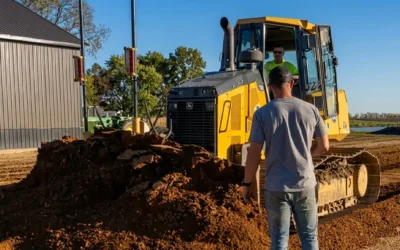
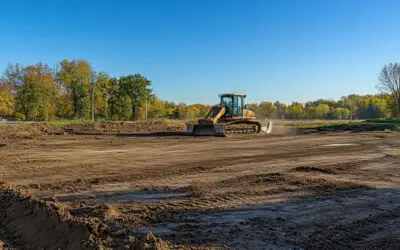
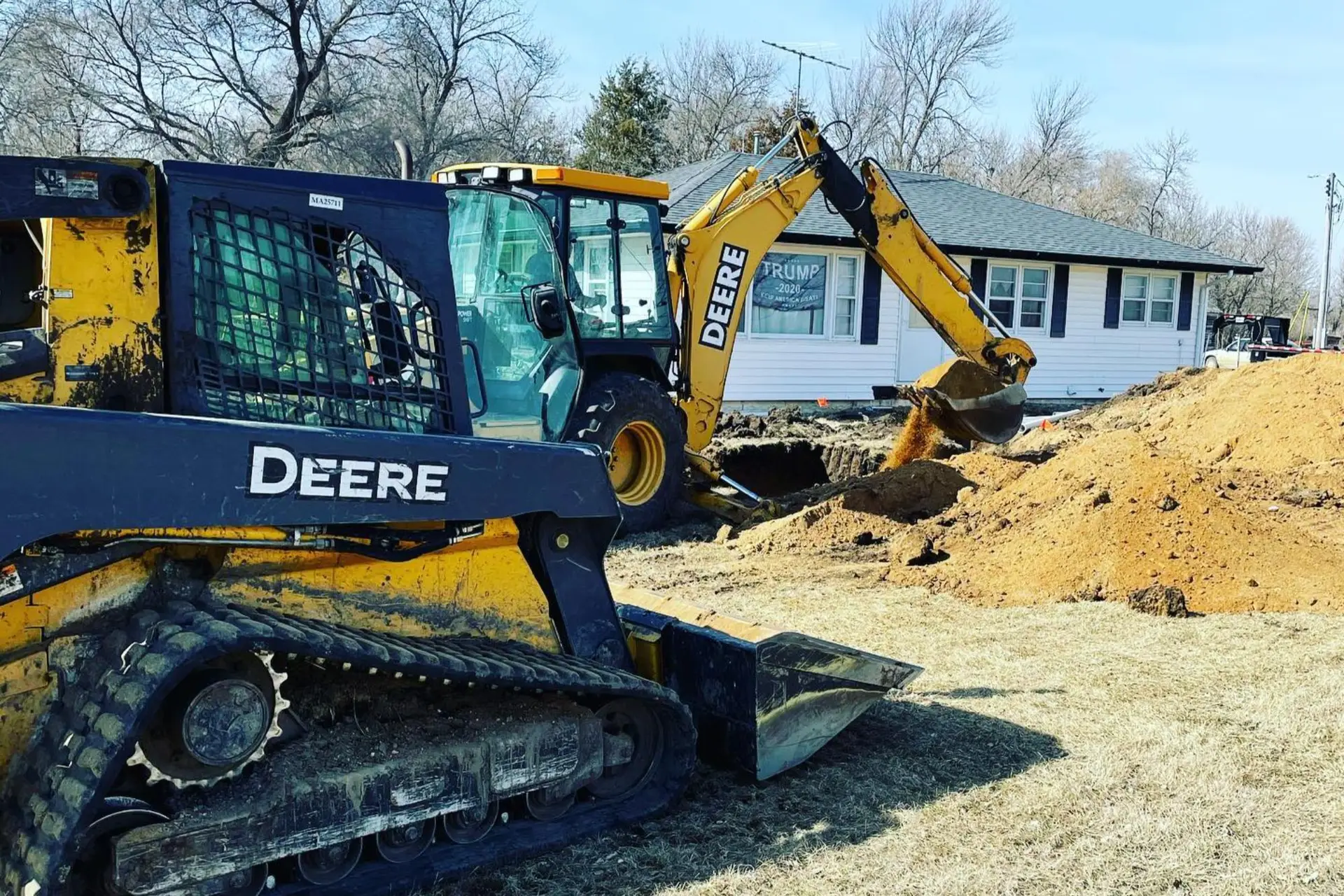
Drainage solutions range from simple regrading to full drainage system installation. For many properties, regrading the land around a structure to create positive slope away from the foundation is enough to solve the problem. We move the grade so water flows naturally away rather than pooling against the building.
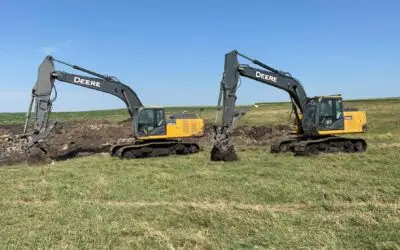
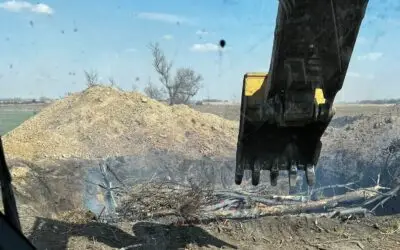
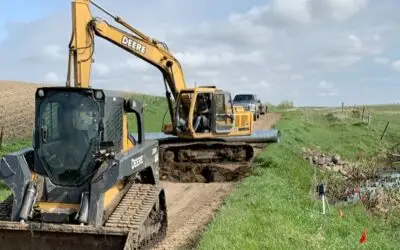
Where grading alone is not enough, we install French drains, channel drains, or culverts to intercept water and route it to an appropriate outlet. On agricultural land or large rural properties, we often manage drainage at a larger scale with swales, diversions, and tile systems.
The solution depends on the volume of water, the soil type, the slope, and what is downstream. We look at all of it before recommending anything.