Introduction
If you have ever watched a new building develop cracks within its first few years, or seen a driveway heave and buckle after a hard South Dakota winter, there is a very good chance the problem started before a single concrete truck showed up. Proper site preparation is the foundation beneath the foundation, and skipping steps here is one of the most expensive mistakes a property owner can make.
At Cobb Creek Excavating, we work on projects across Brookings County and the surrounding region. Whether it is a new home build, a shop pad, a barn, or a commercial development, every job starts the same way: we look at what is under the ground before we do anything on top of it.
What Site Preparation Actually Means
Site prep is not just moving dirt around. It is a deliberate sequence of steps that prepares your land to safely hold whatever is being built on it. Done correctly, it prevents settling, keeps water moving away from structures, and gives your contractor a clean, stable surface to work from.
In South Dakota, we work with clay-heavy soils in many parts of Brookings County. Clay is notoriously expansive. It swells when it absorbs water and contracts when it dries out. If that movement happens under a slab or a footer, the structure above it is in trouble. Good site prep accounts for soil type from the start.
The Steps We Take Before Any Dig
1. Site evaluation and soil assessment Before the machines start, we walk the land. We look at the natural slope, where water collects after a rain, existing vegetation, and any signs of previous disturbance. This tells us a lot about what we are dealing with before we pick up a shovel.
2. Stripping topsoil Topsoil is rich with organic material. That is great for a garden, but terrible under a structure. Organic material compresses, decomposes, and settles unevenly over time. We strip and stockpile the topsoil to a depth that gives us clean, stable subsoil to build on.
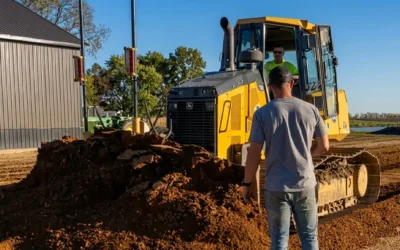
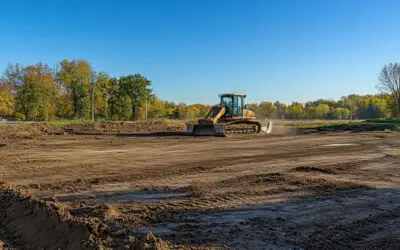
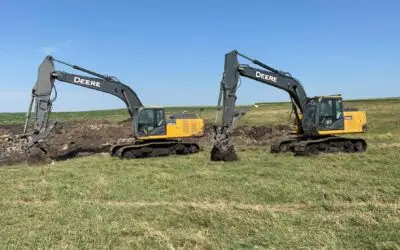
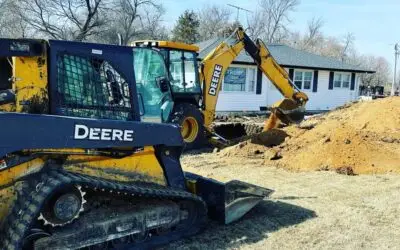
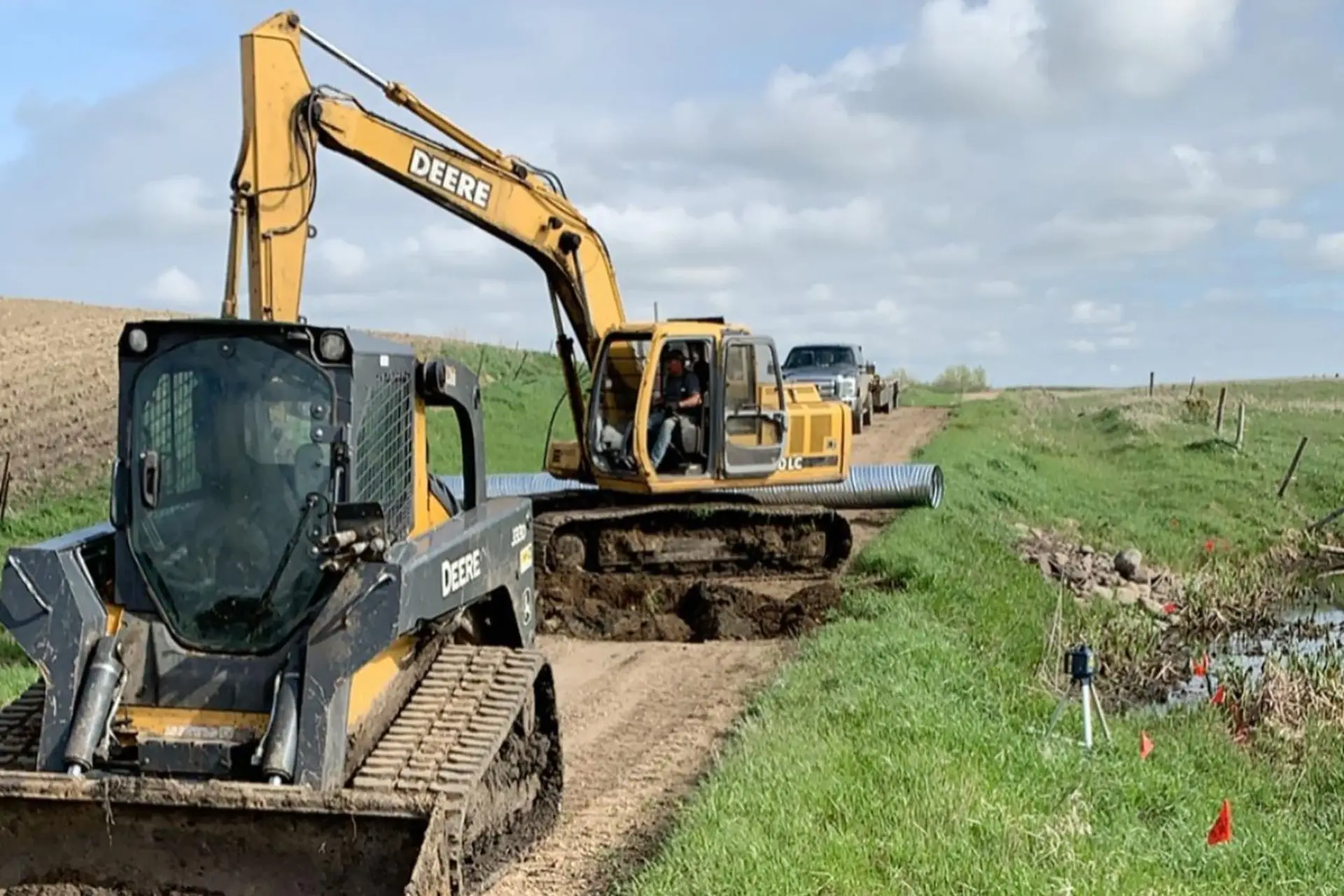
3. Rough grading and earthwork This is the heavy machine phase. We use dozers, scrapers, and excavators to shape the land to the design grade, cutting high spots and filling low areas to create a level pad that slopes gently away from the structure.
4. Compaction Any fill material goes in in layers, and each layer gets compacted before the next one goes down. This is what keeps your slab from cracking five years later.
5. Sub-base installation For slabs, driveways, and building pads, we install a compacted aggregate sub-base. This layer of crushed rock distributes load evenly and provides drainage beneath the concrete.
6. Final grade and drainage routing Before we hand the site over, we confirm water is being directed where it needs to go: away from structures, toward natural outlets or installed drainage, with no low spots where water will pool.
What Happens When Site Prep Is Skipped
The most common issues we get called in to fix after the fact include cracked slabs from poor compaction, water pooling against foundations, driveway heaving from frost and inadequate sub-base depth, and erosion cutting into finished grades after the first heavy rain.
Every one of these issues costs far more to fix after the fact than it would have cost to prevent at the start.